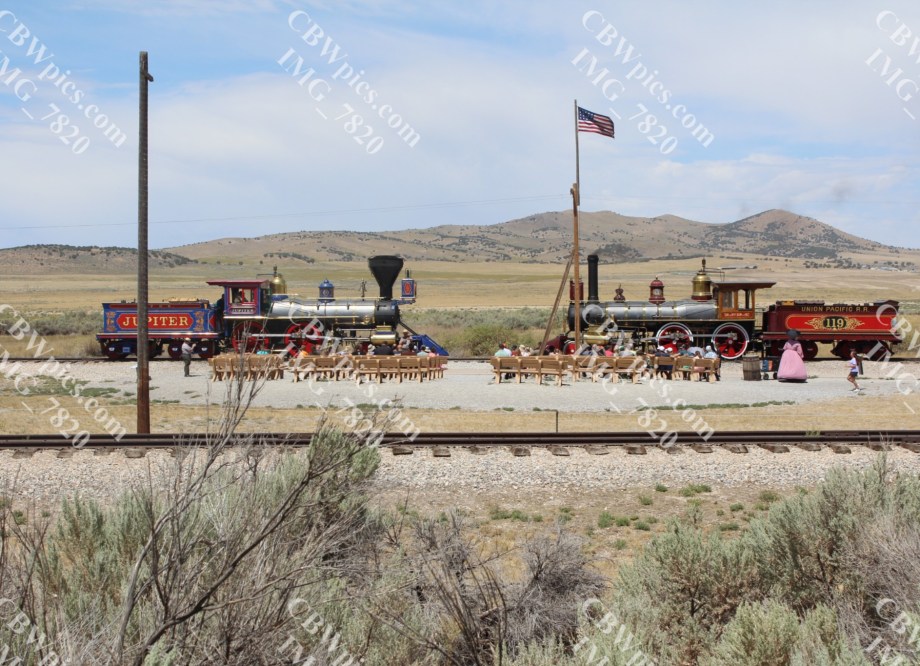
Happy! Happy! Joy! Joy! I just realized that my previous post was post number FOUR HUNDRED on this blog. That sounds like far more typing than a man in my condition should be doing. But I shall continue until it kills me. Or maybe a few days afterwards. Just so I can post a trip report from the highway to Hell (not Hell, Michigan – already been there). For now, though, I still have travel reports for Utah that I need to finish.
Day 4:
In my previous post, I claimed that I am not quite a super rail geek. If that’s so, then why the Hell am I at Promontory Point, Utah watching a re-enactment of the completion of the first trans-continental railway? Especially since it’s only been about three months since I was at the Union Pacific Museum in Council Bluffs, Iowa, where an entire floor of the building is devoted to the first trans-sexual railroad. But this ain’t Iowa; Iowa has trees.
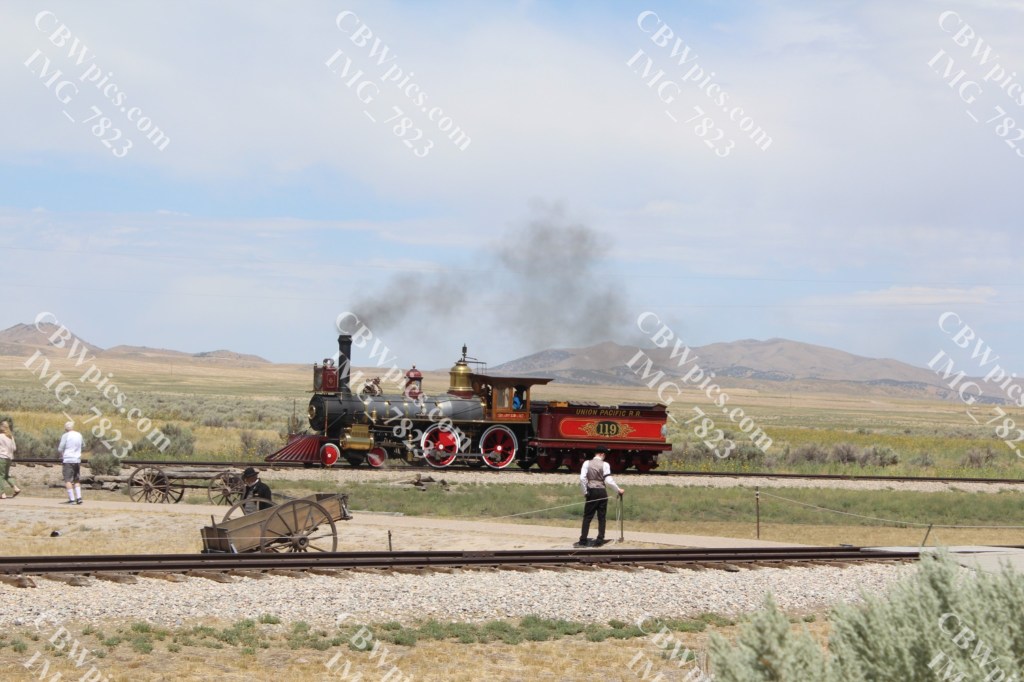
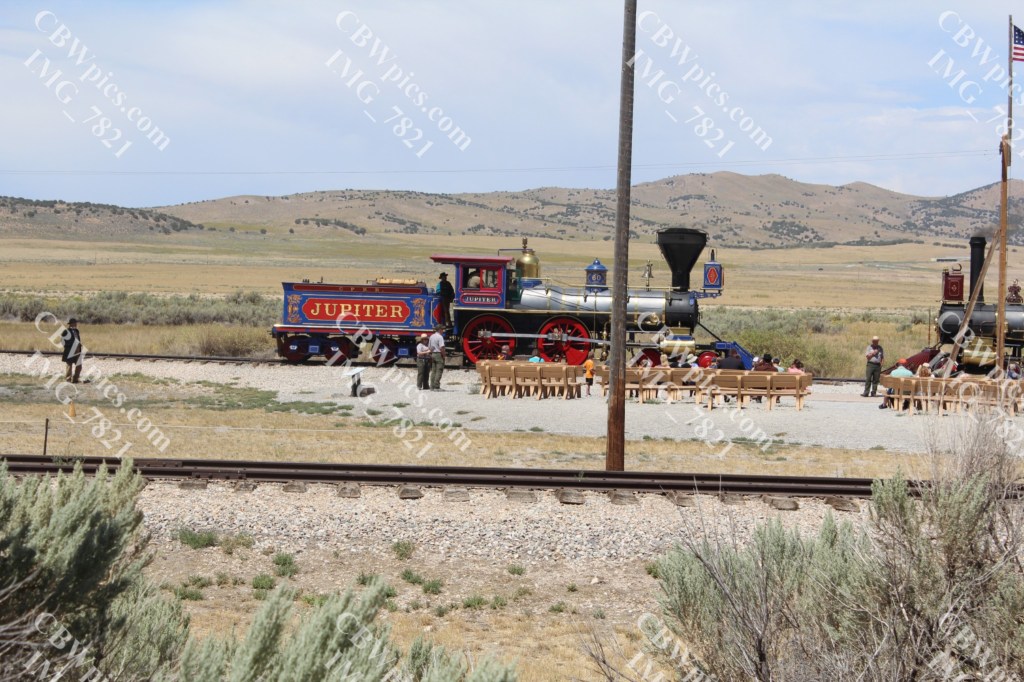
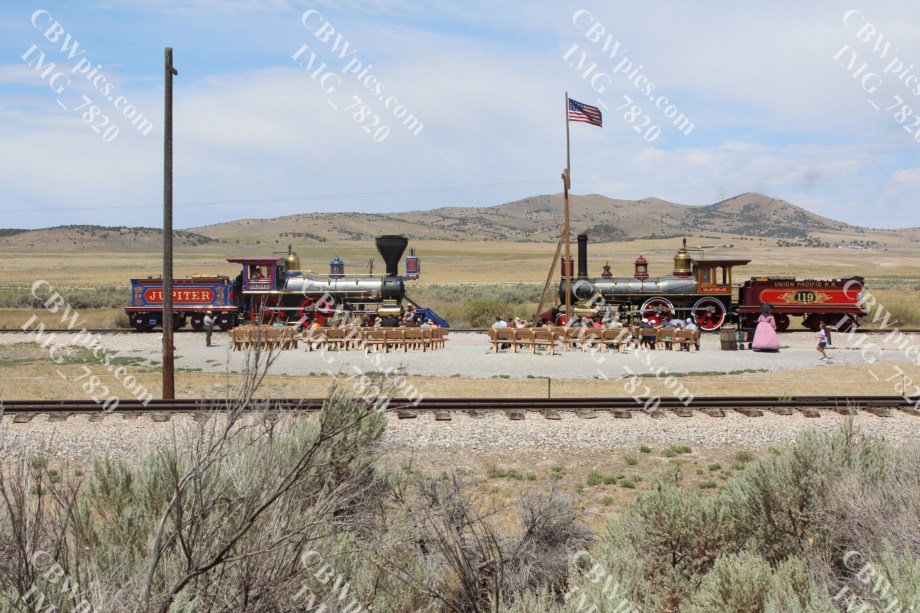
Each of the two railroads that met for the official conjoining of the tracks sent an ‘ambassadorial’ locomotive to participate in the ceremony marking the completion of the translucent railroad. It seems the Central Pacific was still clinging to the old practice of naming their locomotives; they sent the Jupiter. Union Pacific, on the other hand, were living in the now, man! Their locomotives were all assigned numbers, not names. They sent number 119.
The locomotives used for the re-enactments today are not the originals. While they are legitimate, operable steam loco’s, they are mere replicants of the originals. Take a look:
The truth is, when the official ceremony took place on May 10th, 1869, the railroads had already met but neither of them had stopped building. Y’see, the federal government, in subsidizing the Trans Am Railway, had promised a certain amount of money per mile of railroad built. So, instead of completing the route at the point where the railroads connected, each of the two companies continued building more miles of track until the federal government stepped in and said, “Whoa there, knock it off, ya jackasses!”
Thus, for a few miles on either side of Promontory Point, there are two railroad grades: one built by each company. Much of these original grades can be driven or hiked on; it was these historic grades that held the most interest for me.
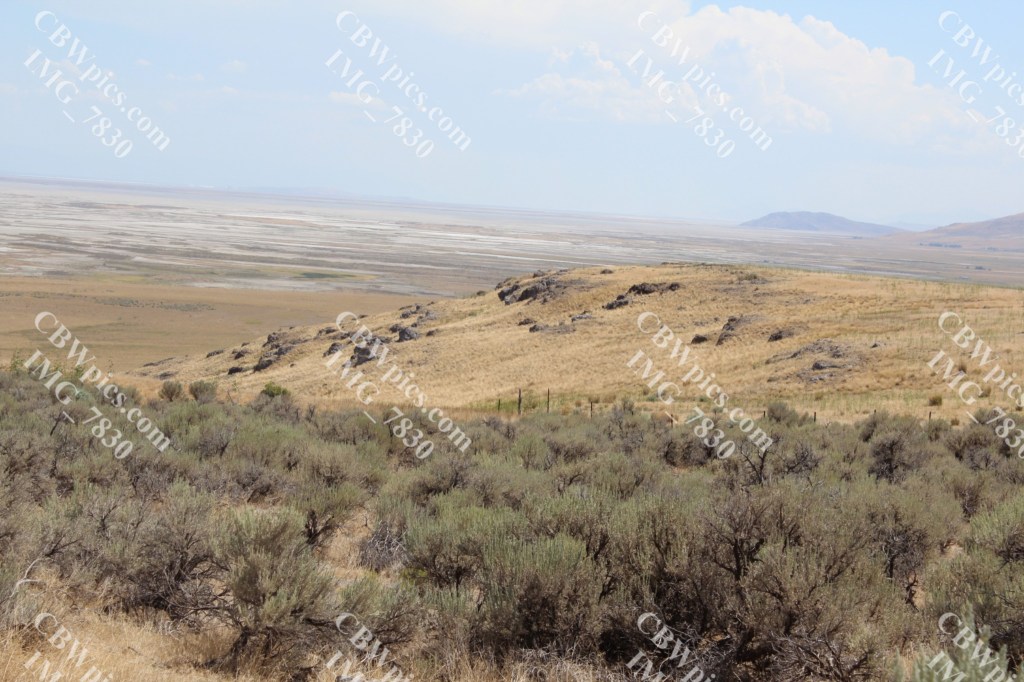
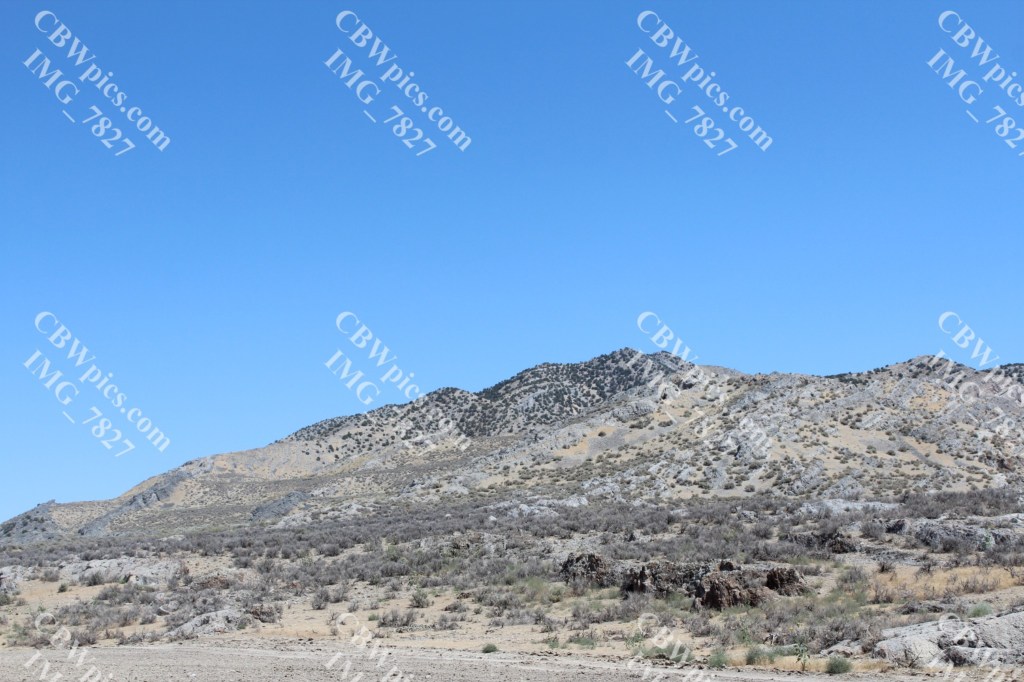
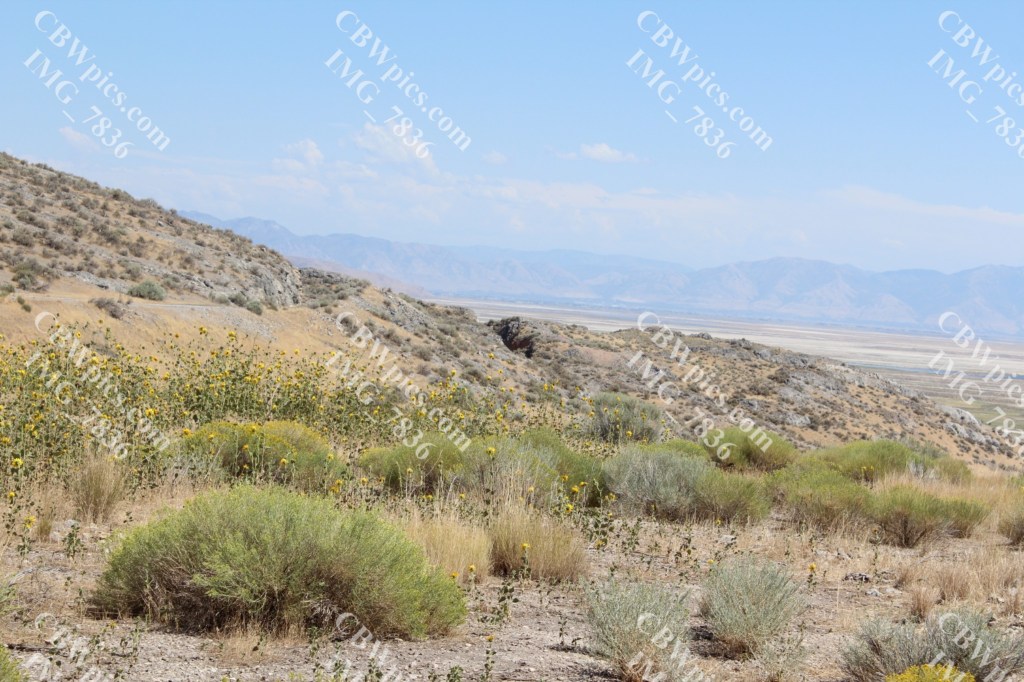
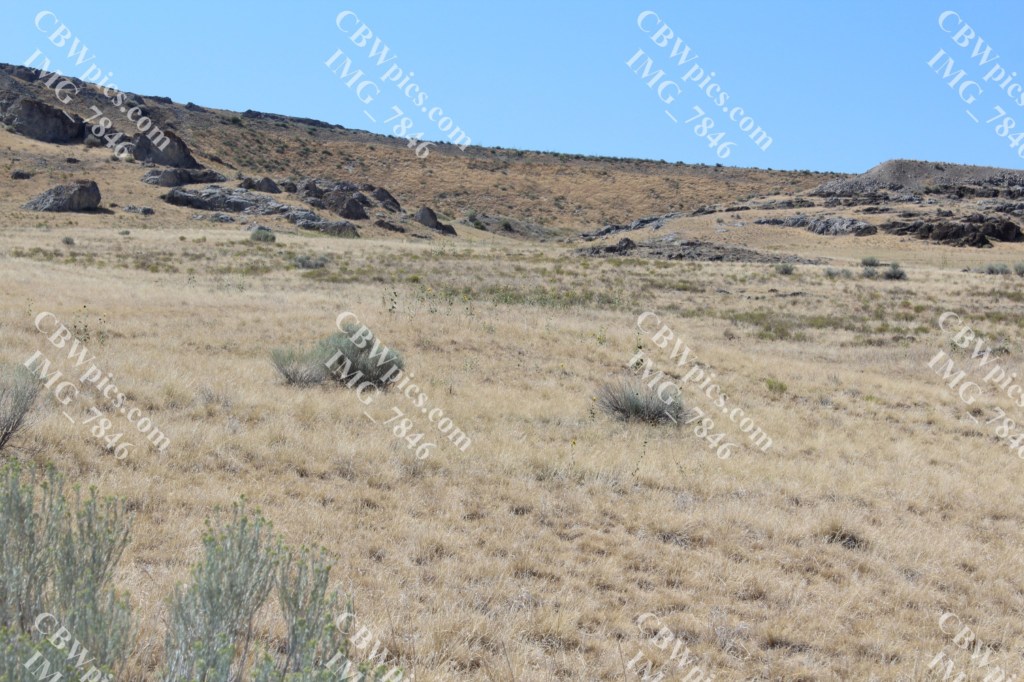
To the west of the point, the land is relatively flat, so the grades are not all that exciting. But these flat lands are surrounded by decent-looking mountains, so I snapped these few pics:
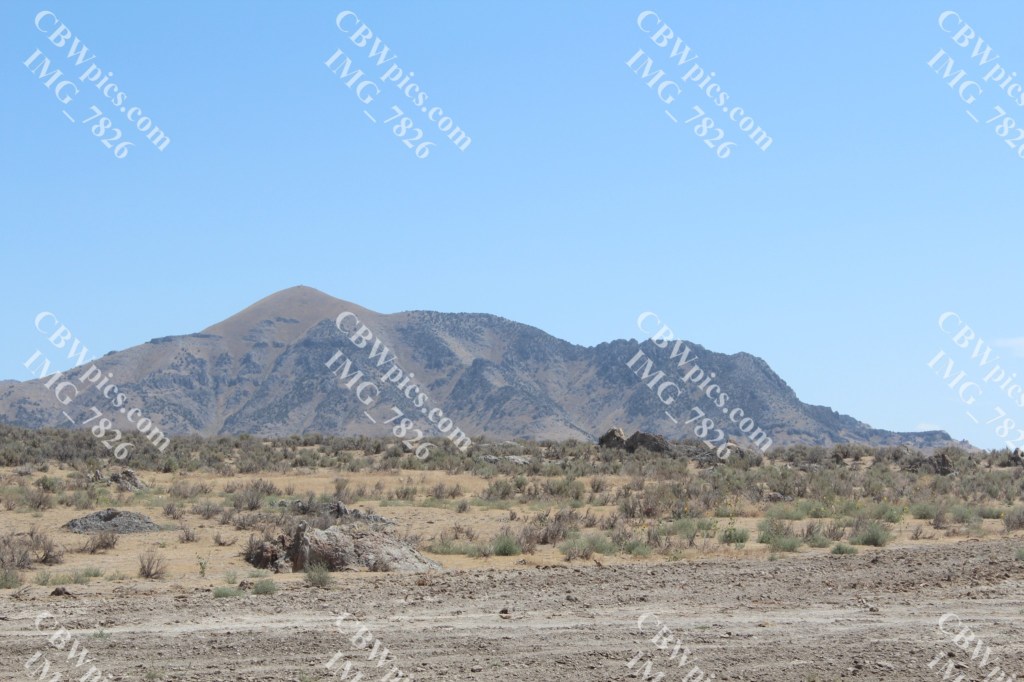
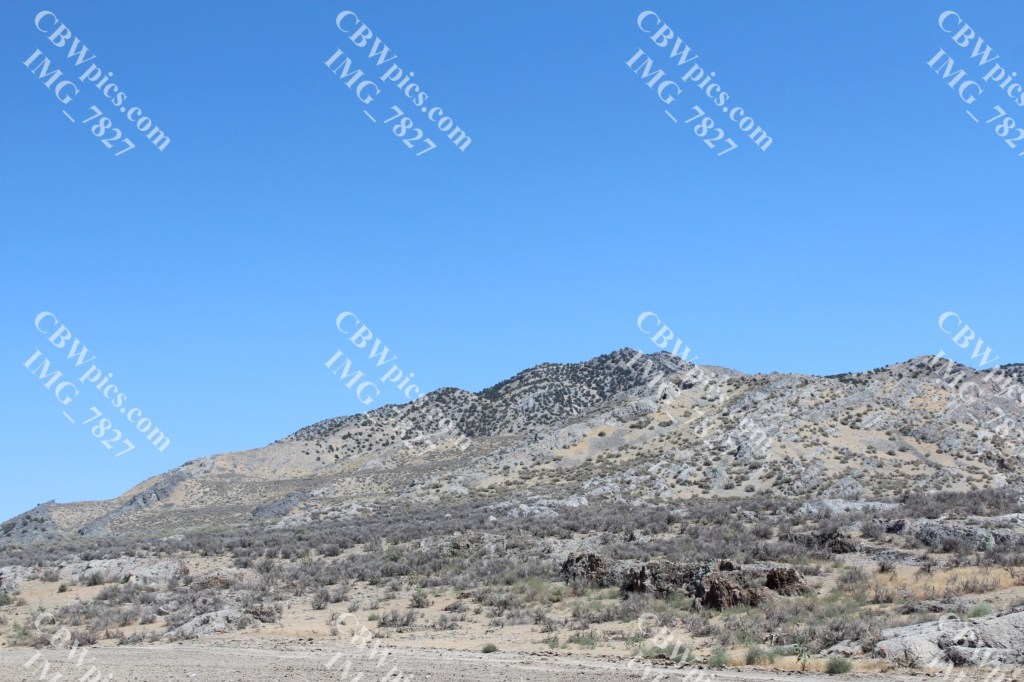
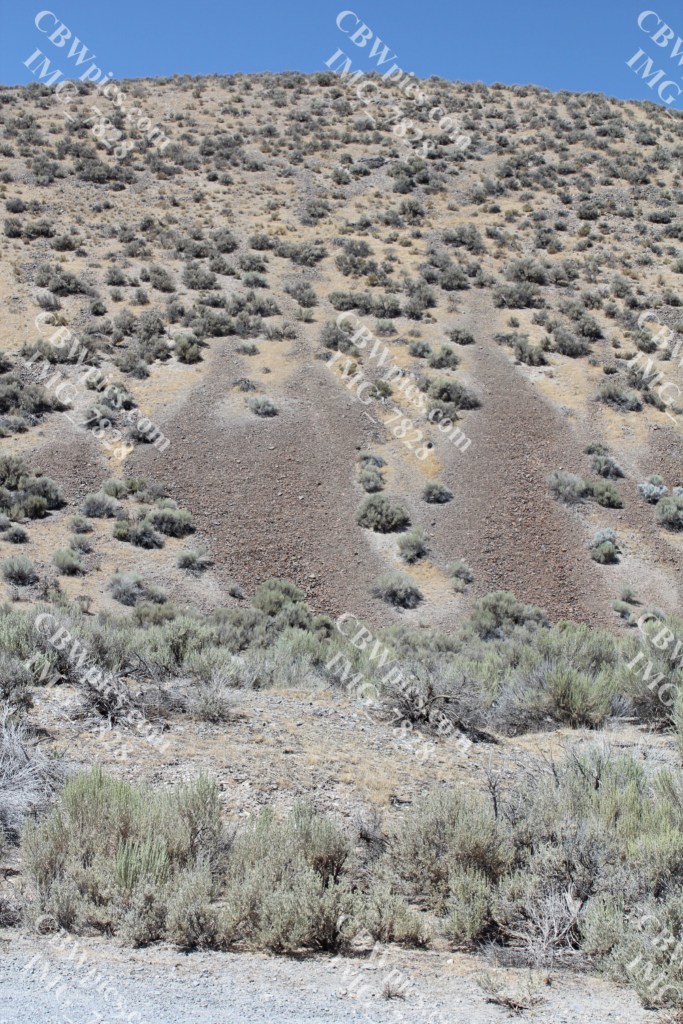
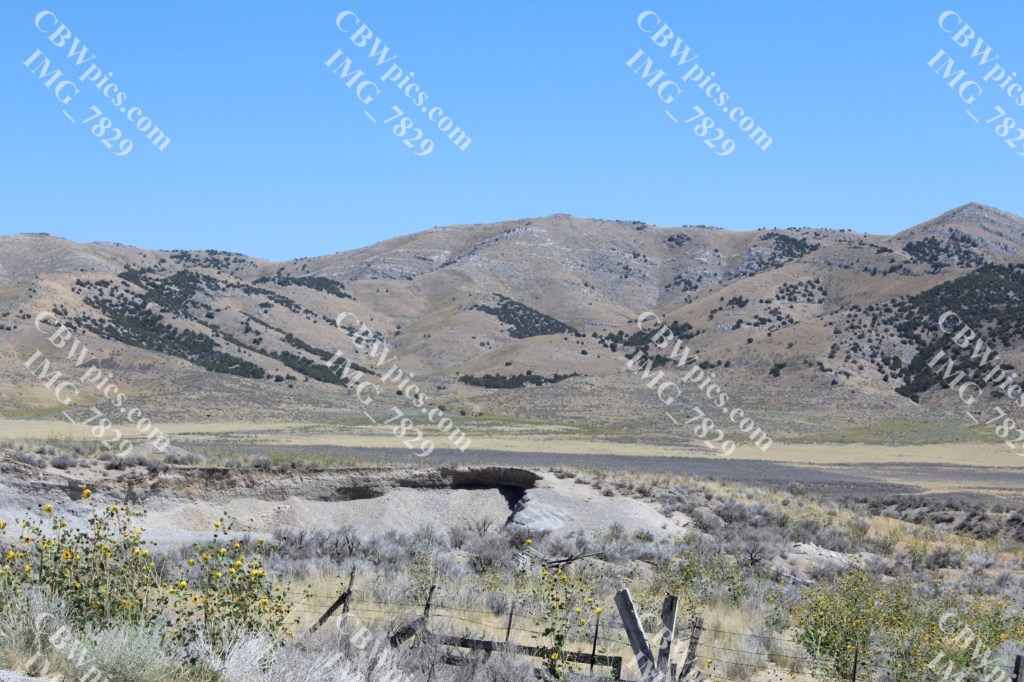
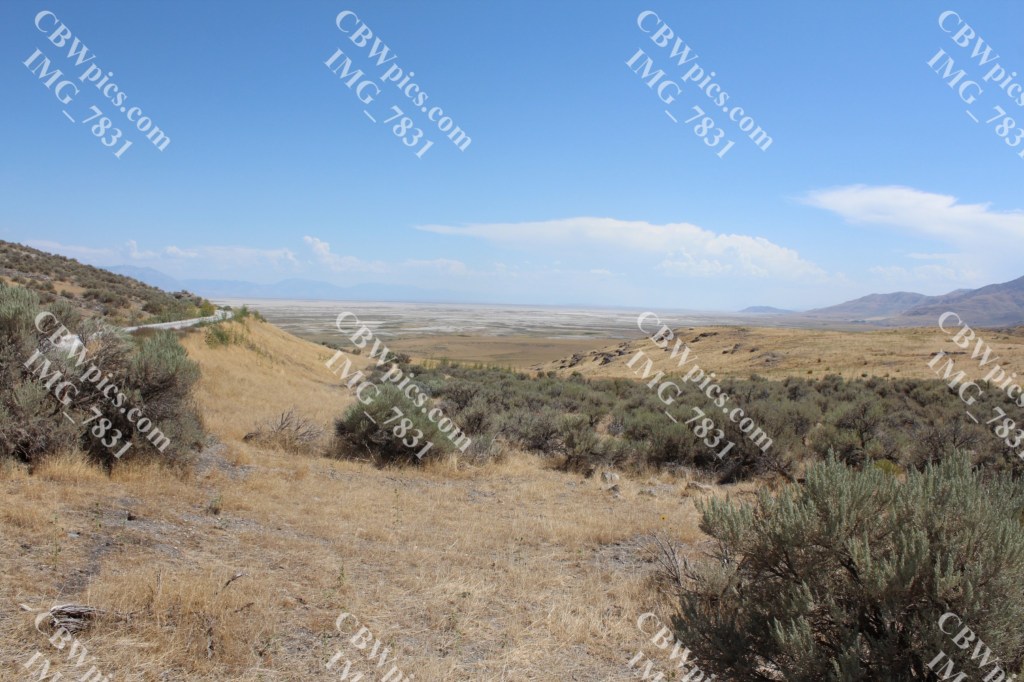
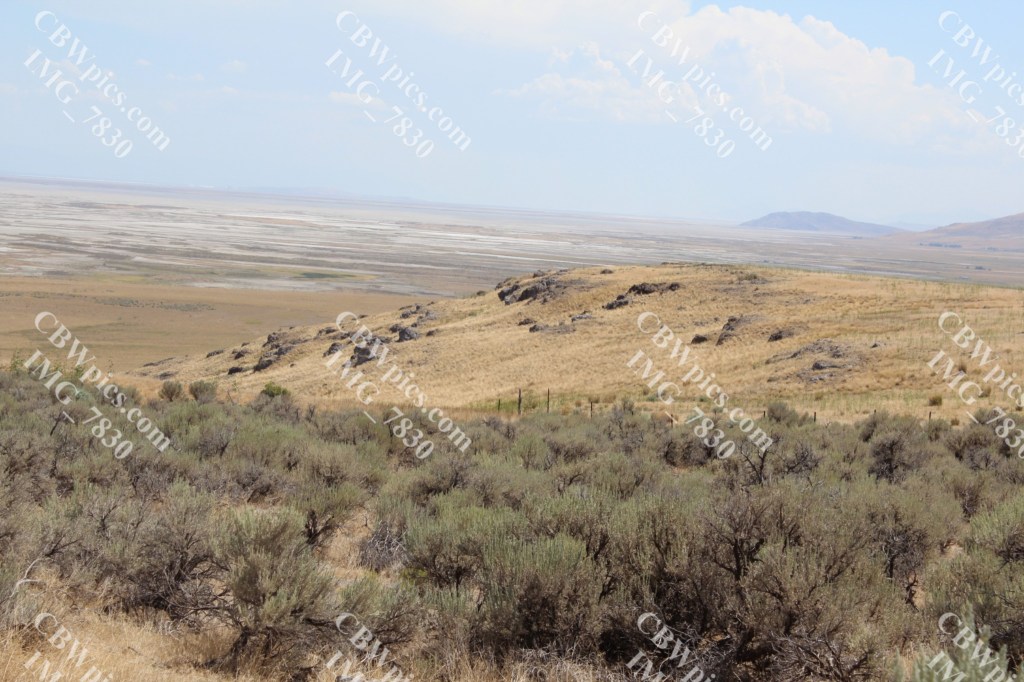
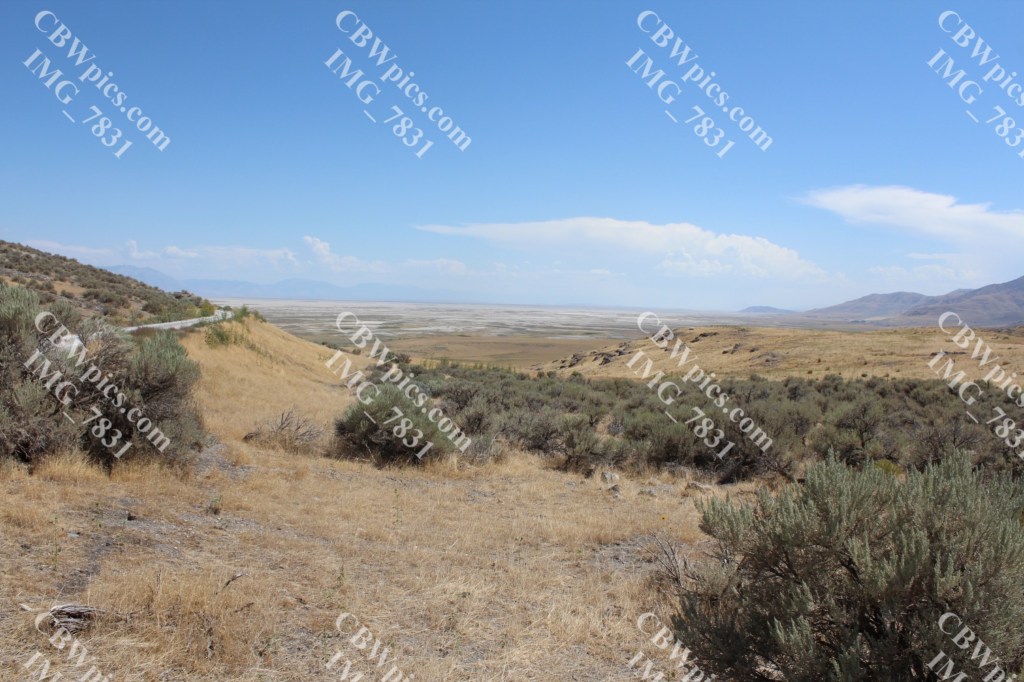
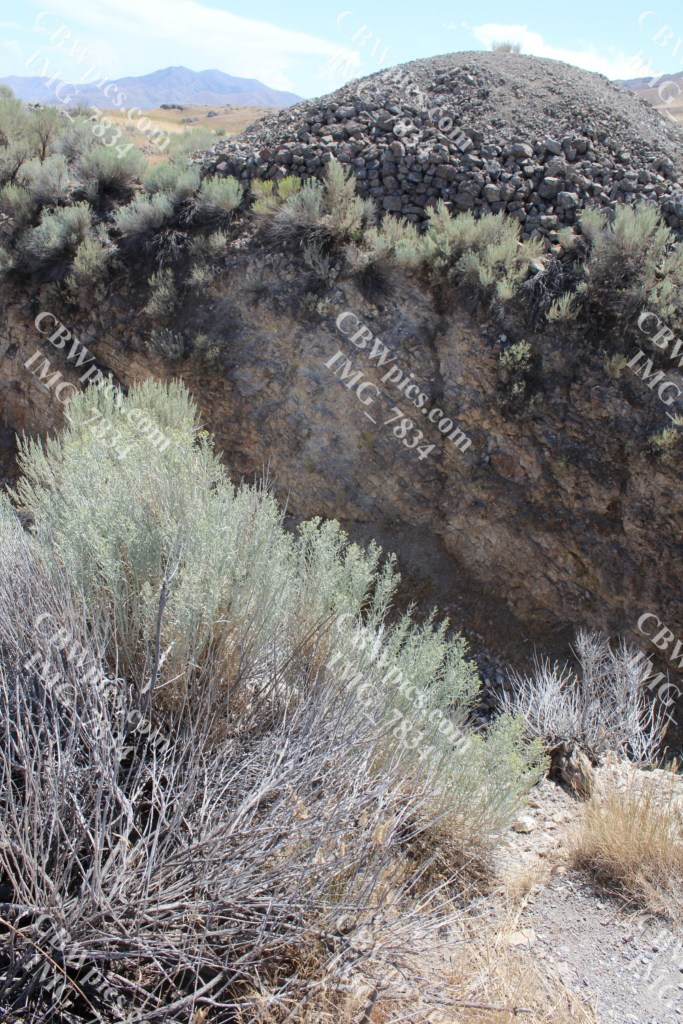
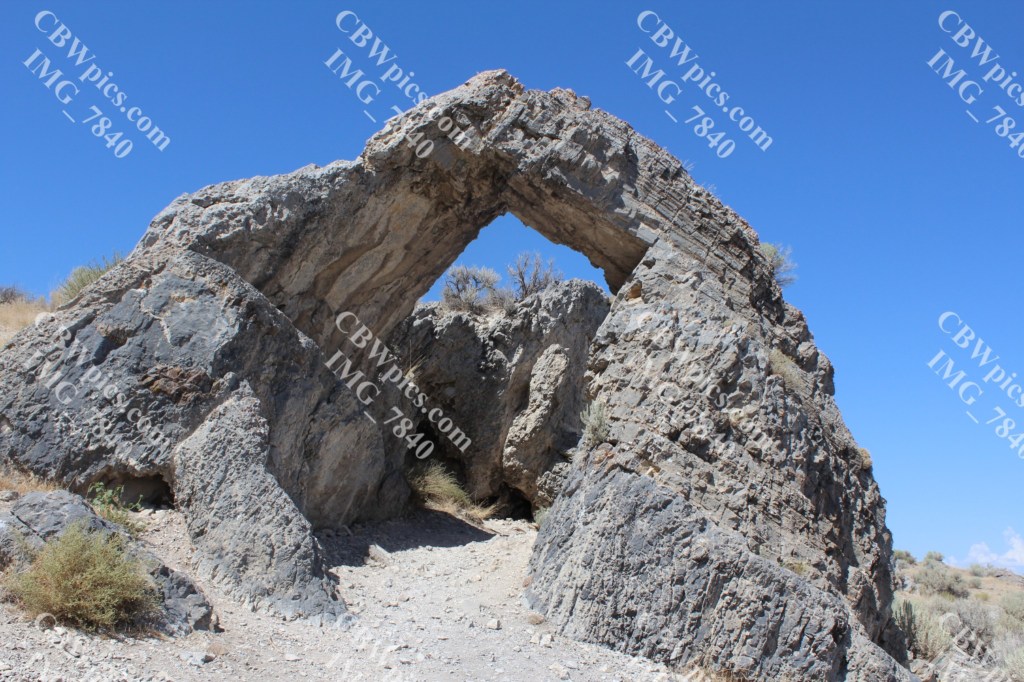
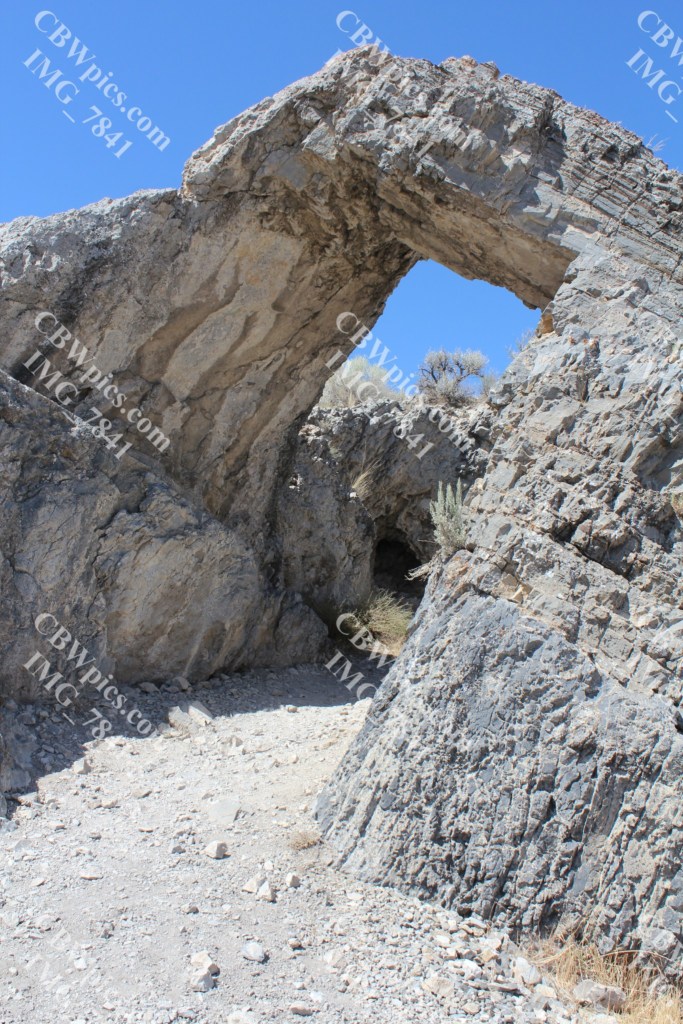
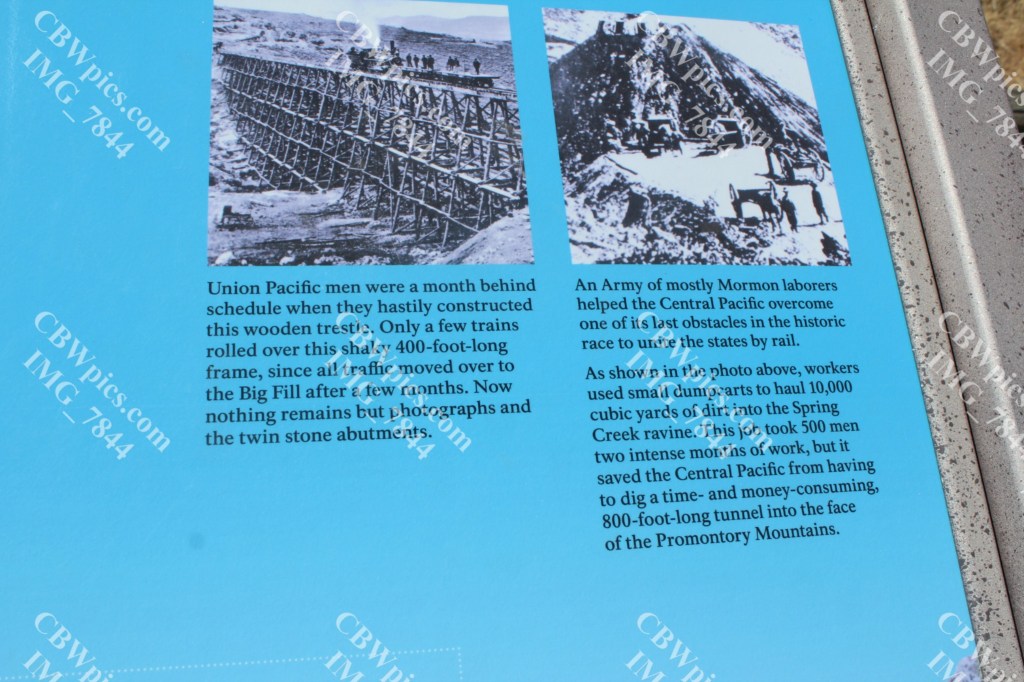
To the east of the point, it’s a different story. The ascension to Promontory Point from the salt flats was the most mountainous territory the Union Pacific encountered in building their portion of the railroad. “Cuts” had to be blasted through the rock, while hills (a.k.a., “fills”) or wooden bridges (“trestles”) had to be built to cross ravines. The trestles are long gone, but the cuts and fills remain. See for yourself:

 Voyages with Parkinson's